
What a slot provider actually does
Every slot game you spin was built by a game studio — the provider. The provider designs the math model (RTP, volatility, hit frequency), the mechanics (paylines, tumble, ways-to-win, bonus rounds), the artwork and the sounds. Platforms then license these games and host them in their lobbies. That's why you'll see the same titles, like Gates of Olympus or Super Ace, available in multiple places — the game is the provider's product, not the platform's.
Understanding providers matters because it's the fastest way to predict how an unfamiliar game will behave. Once you know Pragmatic Play's high-volatility house style or JILI's fast-and-lean design philosophy, you can walk into any lobby and make an informed choice in under a minute instead of burning RM30 on a game that doesn't suit your budget. This guide breaks down the major providers available to Malaysian players and gives you a practical framework for choosing between them.
Why the provider matters more than the individual game
Providers tend to reuse their math frameworks across many titles. Pragmatic Play's "pay-anywhere + tumble + multiplier orbs" engine powers Gates of Olympus, Sweet Bonanza, Sugar Rush and Starlight Princess — learn one and you effectively know four. JILI builds most of its slots around simple reels, medium volatility and quick sessions. PG Soft favours low-to-medium volatility games wrapped in cinematic 3D animation. So the provider you gravitate toward quietly shapes your entire experience: how long your bankroll lasts, how often features trigger, and what kind of highs and lows you'll feel.
The second reason is RTP configuration. Providers license multiple RTP versions of the same game — commonly 96.5%, 94% and 92% — and the hosting platform decides which one runs. A provider's games are only as good as the configuration the platform picked, which is why the single most important habit is opening the in-game info page and checking the RTP before your first spin.
The major providers, profiled
Pragmatic Play — the high-volatility heavyweight
Pragmatic Play is arguably the most recognised slot studio in Southeast Asia right now. Its signature engine — 8-or-more matching symbols anywhere on the grid, tumbling wins, and multiplier orbs that stack during free spins — powers its biggest hits: Gates of Olympus, Sweet Bonanza, Sugar Rush and the Starlight Princess series. Most titles sit around 96–96.5% RTP with high volatility and max wins from 5,000x up.
What that means in practice: long dry stretches, then explosive bonus rounds. Pragmatic games are thrilling, but they punish small bankrolls. If your budget only buys fewer than 100 spins at your chosen bet size, a Pragmatic title is the wrong tool — you'll likely exit before the feature lands. These games reward players who can fund 200+ spins or who accept that most short sessions end flat.
JILI — fast, lean, mobile-first
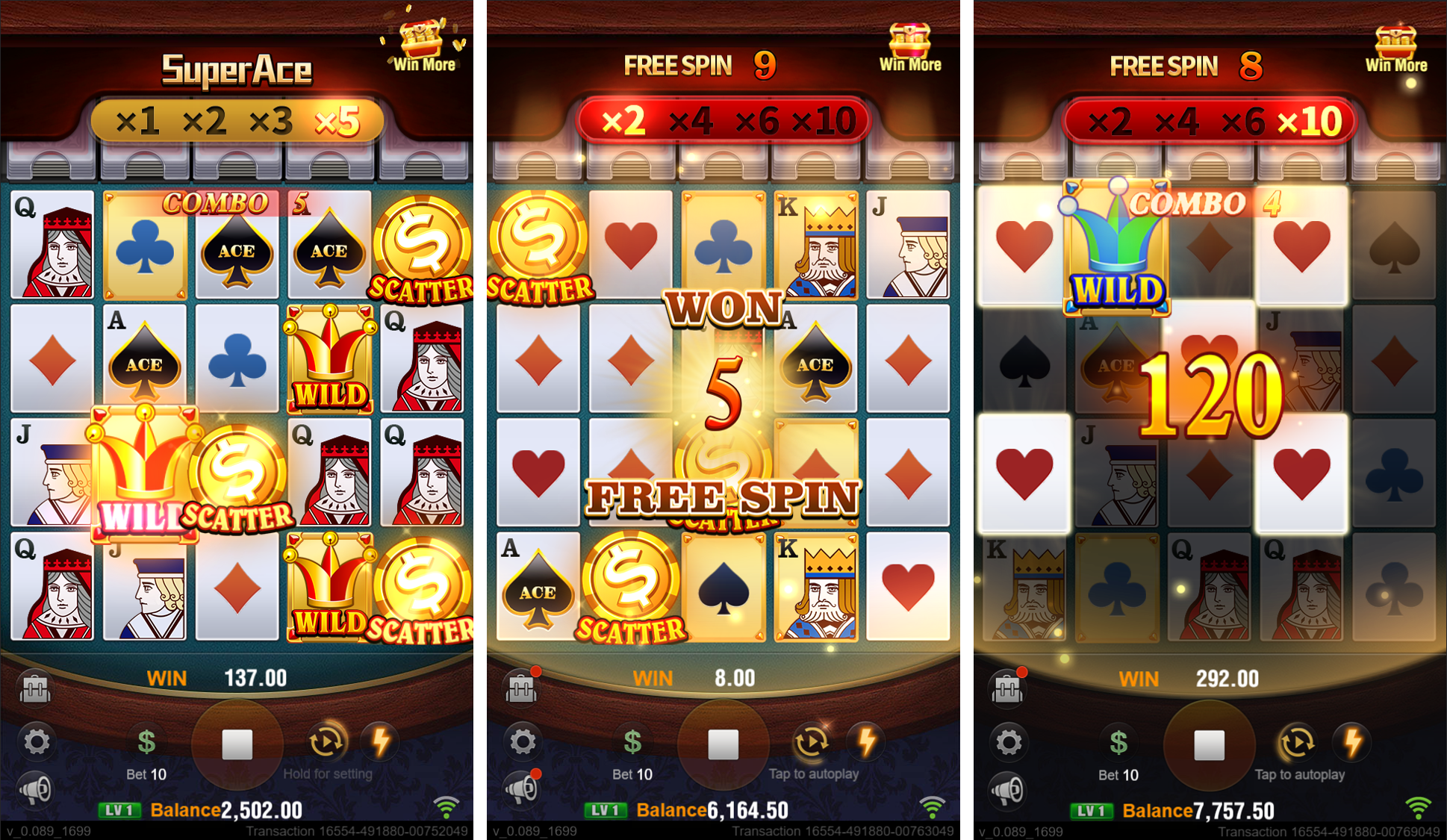
JILI Games, founded in 2016, has become the default "casual" provider in Asian lobbies. Its design philosophy is the opposite of Pragmatic's: fewer reels, simpler paytables, medium volatility and a fast spin pace. Super Ace (1024 ways-to-win, ~96.8% RTP) is the flagship; Money Coming offers frequent small wins that suit tight budgets; Fortune Gems adds a pick-me bonus for players who want feature-led sessions. JILI also produces fishing games, which are a genuine alternative when you want a change of pace from reels.
JILI's titles rarely deliver the 500x-orb moments that Pragmatic is famous for, but they also drain a small balance far more slowly. For Malaysian players starting with RM20–50 sessions, JILI is usually the friendliest entry point in the lobby.
PG Soft — the visual storyteller
PG Soft (Pocket Games Soft) built its reputation on production values: 3D character animation, detailed backgrounds and smooth mobile performance that still holds up on mid-range phones. Its catalogue — Mahjong Ways 1 and 2, Fortune Dragon, Wild Bandito, Treasures of Aztec — leans low-to-medium volatility with innovative spins on familiar mechanics, like Mahjong Ways' tile-matching transformation feature.
PG Soft games are the "comfort watch" of slots: engaging, forgiving in the base game and less prone to brutal variance. The trade-off is that headline max wins are usually smaller than Pragmatic's. If you value session longevity and visual polish over jackpot-chasing adrenaline, PG Soft should be your first stop.
Other studios worth knowing
Beyond the big three, a few names regularly appear in Malaysian lobbies. 918KISS and Mega888 are classic local-favourite platforms whose in-house game lists lean on simple, low-bet classics that older Malaysian players grew up with. JDB and Joker offer compact catalogues with a similar fast-spin, low-minimum-bet feel. These studios matter less for cutting-edge features and more for accessibility: low minimum bets, familiar gameplay and games that run well on modest devices.
A practical framework for choosing
Here's a five-question checklist that works for any lobby. One: what's my bankroll in spins? Divide your session budget by the minimum bet to get your spin count. Fewer than 100 spins means stick to low/medium volatility — JILI or PG Soft. 200+ spins opens the door to Pragmatic. Two: what does the in-game info page say? Check the actual RTP of the configuration being offered — anything below 95% deserves a second thought. Three: do I want frequent feedback or rare big hits? Frequent feedback = JILI, PG Soft, classic platforms. Rare big hits = Pragmatic. Four: does the game run well on my device? Test in demo mode; heavy 3D titles can lag on older phones. Five: do I understand the bonus trigger? If the paytable's rules section confuses you, pick a simpler game — confusion leads to oversized bets.
One habit I've settled on after years of rotating between these studios: I match the provider to the session length I have. A 20-minute GrabFood wait goes to JILI's Money Coming — quick spins, steady feedback, easy to walk away from. A planned weekend session with a proper budget goes to Pragmatic, where I can afford to wait out the dry stretches for the feature rounds. That one matching decision does more for my results than any "lucky game" superstition ever did.
Red flags to watch for
Regardless of provider, a few warning signs should make you walk away. If a game's info page doesn't display its RTP or rules, that's an immediate fail. If the provider name shown inside the game doesn't match what the lobby advertises, something is off — cloned and pirated slots do exist in the grey market, and they don't run the audited math the original does. And if a "provider" you've never heard of only appears on one obscure platform with no licence information anywhere, treat it with suspicion. The established studios — Pragmatic Play, JILI, PG Soft and the other names above — publish transparent math and rules in every title precisely so players can verify them. Take advantage of that transparency every single time.